THE FIRST COLLECTION
Peanut Soba with Edamame
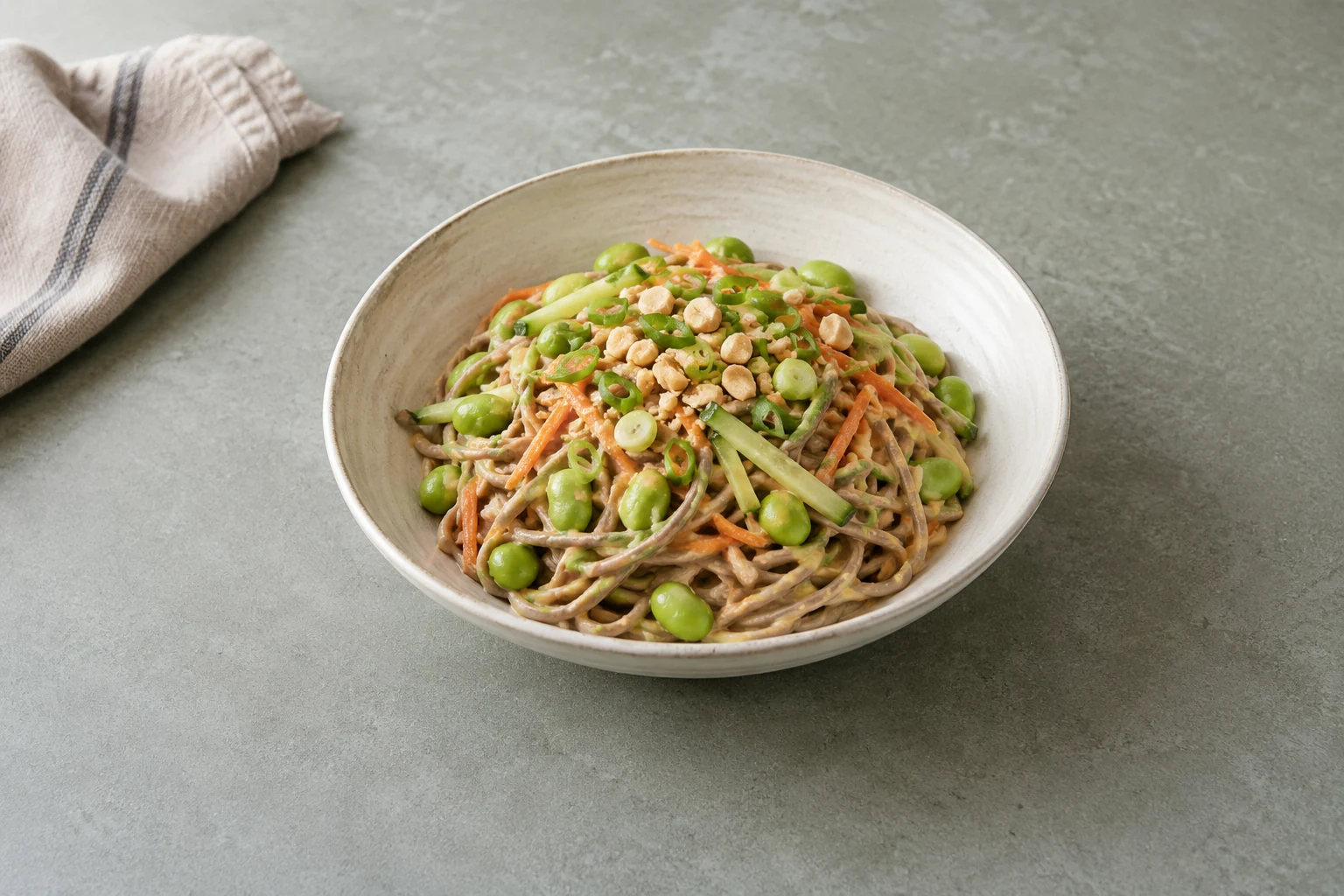
Cool buckwheat soba, edamame and crisp vegetables meet a creamy peanut dressing with lime, soy and ginger. Chopped peanuts finish a bowl that is rich, fresh and full of contrasting textures.
The dressing should cling to separate strands rather than settle into a puddle. Whisking it before the noodles go in, then rinsing and thoroughly draining the soba, gives the sauce a cohesive coating without accidental dilution.
THE RESTAURANT MOVE
Control the dressing water
Whisk the peanut dressing until it drizzles, then coat soba only after rinsing it cool and draining thoroughly. This keeps uncontrolled rinse water from thinning the measured dressing. The finished noodles should separate under a creamy coating without a pool; if stiff, use only the written extra-water allowance.
Why it matters: water left on the noodles becomes part of the dressing. Controlling that moisture protects its body, so a creamy sauce stays on the soba instead of collecting underneath it.
Learn the peanut-dressing application: build a cohesive base, control dilution, then coat the prepared food.
Learn the Method: Build a Cold Emulsion ↗Before you cook: Check soba and peanut-butter labels
Soba can contain wheat; it is not automatically gluten-free. Use the stated dry noodle weight and cooked shelled edamame, then rinse and drain thoroughly. Build a Cold Emulsion applies here through a drizzly peanut dressing; surface water can dilute it, while natural versus stabilized peanut butter may change the needed water. Use the recipe’s one shared water allowance.
Equipment & batch plan
- Large noodle pot — required. Cook edamame then soba sequentially by their packages.
- Colander and slotted spoon — required
- Whisk and large mixing bowl — required
- Grater and preparation board — required
- Separate fruit board — required for the selected dinner
KNOW YOUR INGREDIENTS
Ingredients that make the difference.
The useful choices behind this dish. Exact quantities are in the recipe below.
- Smooth peanut butter and measured warm water
- Whisk into a drizzly coating with the written seasonings; use only the remaining shared water reserve if stiff. Excess rinse water is not controlled dressing water.
- Dry soba
- Use the stated dry soba and its short package cook, then rinse cool and drain thoroughly. Soba often contains wheat as well as buckwheat; check labels before any gluten-free claim.
- Frozen shelled edamame
- Cook the frozen shelled edamame by its package until hot throughout, then cool it in a clean bowl before combining with the raw vegetables and cool noodles.
Ingredients & cooking
4 servings · US measures · Written quantities
Ingredients
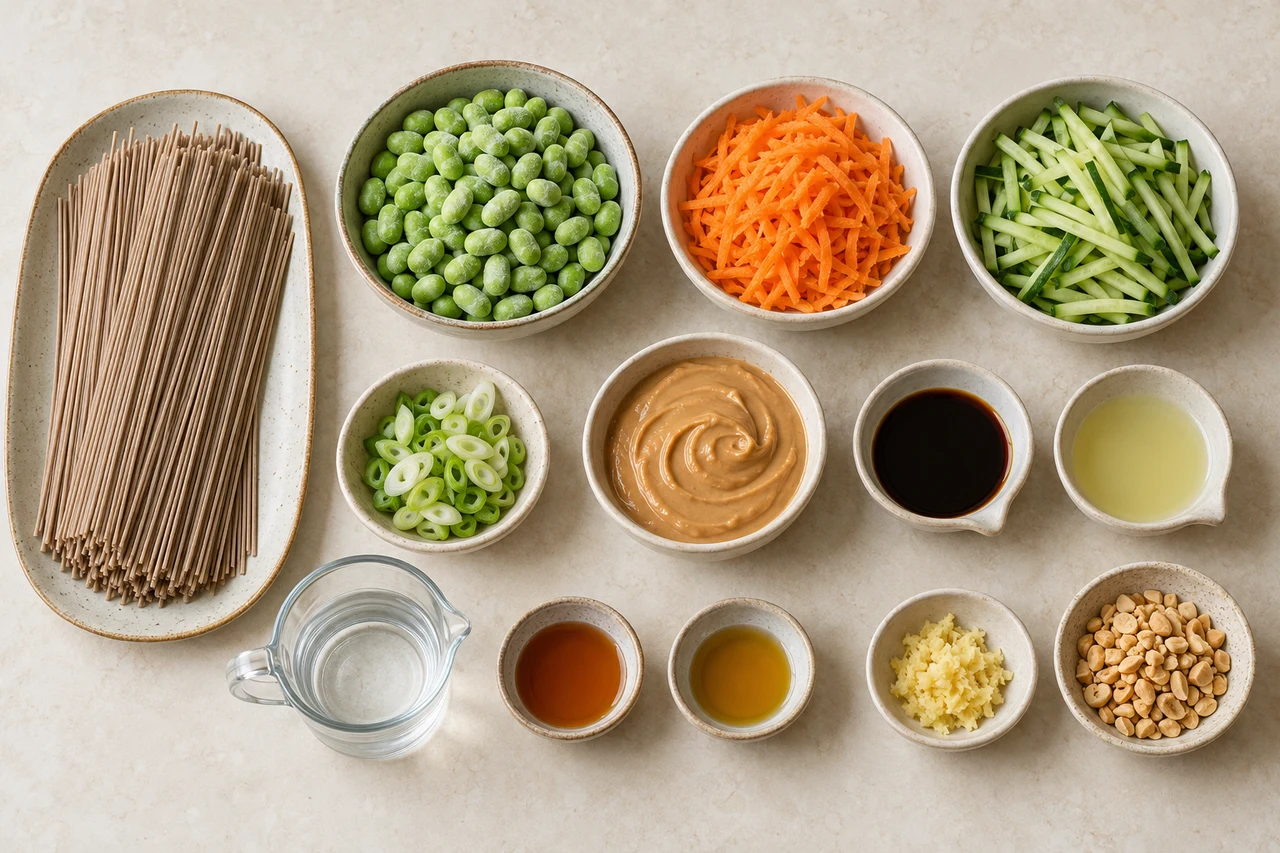
- 9 oz dry buckwheat soba, package cook time 4–6 minutes
- 2 1/2 cups frozen shelled edamame
- 1 1/2 cups coarsely grated carrot
- 7 oz cucumber, cut into thin matchsticks
- 2 scallions, sliced
- 1/3 cup smooth peanut butter
- 2 tbsp reduced-sodium soy sauce
- 2 tbsp lime juice
- 1/4 cup warm water, plus up to 2 tbsp in one shared reserve for thinning
- 1½ tsp maple syrup
- 1 tsp toasted sesame oil
- 1 tbsp + 2 tsp finely grated fresh ginger
- 1 1/2 tbsp roasted unsalted peanuts, then chop
Let’s cook
- 01
Set a large pot of water to boil, allowing 10–15 minutes. Grate carrot and ginger; cut cucumber and scallions. Measure the peanuts whole, then chop them. Whisk peanut butter, soy, lime, the base 1/4 cup warm water, maple, sesame oil and the grated ginger until drizzly. If needed, use a little of the shared 2 tbsp warm-water reserve; keep any unused reserve for the final toss.
Whisk to a drizzly coating before adding the noodles.
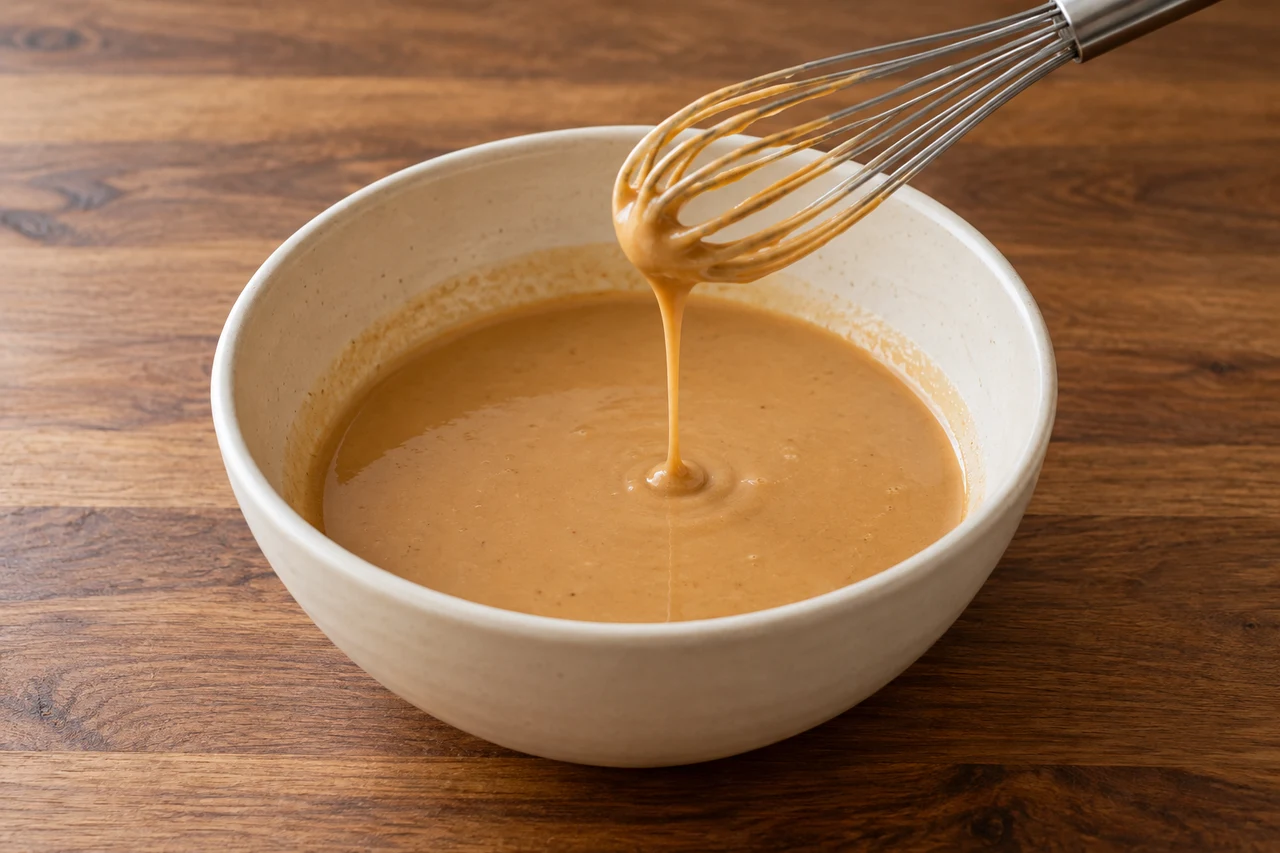
The peanut dressing should be cohesive and drizzly before coating thoroughly drained noodles. - 02
Cook frozen edamame according to its package until hot throughout, typically 4–5 minutes; lift out with a slotted spoon and let cool in a clean bowl. Add fresh water to the pot if needed and return to boil.
- 03
Cook soba according to its 4–6-minute package, stirring gently. Do not treat fresh yakisoba or udon as buckwheat soba.
- 04
Drain and rinse thoroughly under cold running water until cool and no longer sticky. Drain 2 minutes; excess surface water will dilute the dressing.
Rinse until cool and no longer sticky, then drain before dressing.
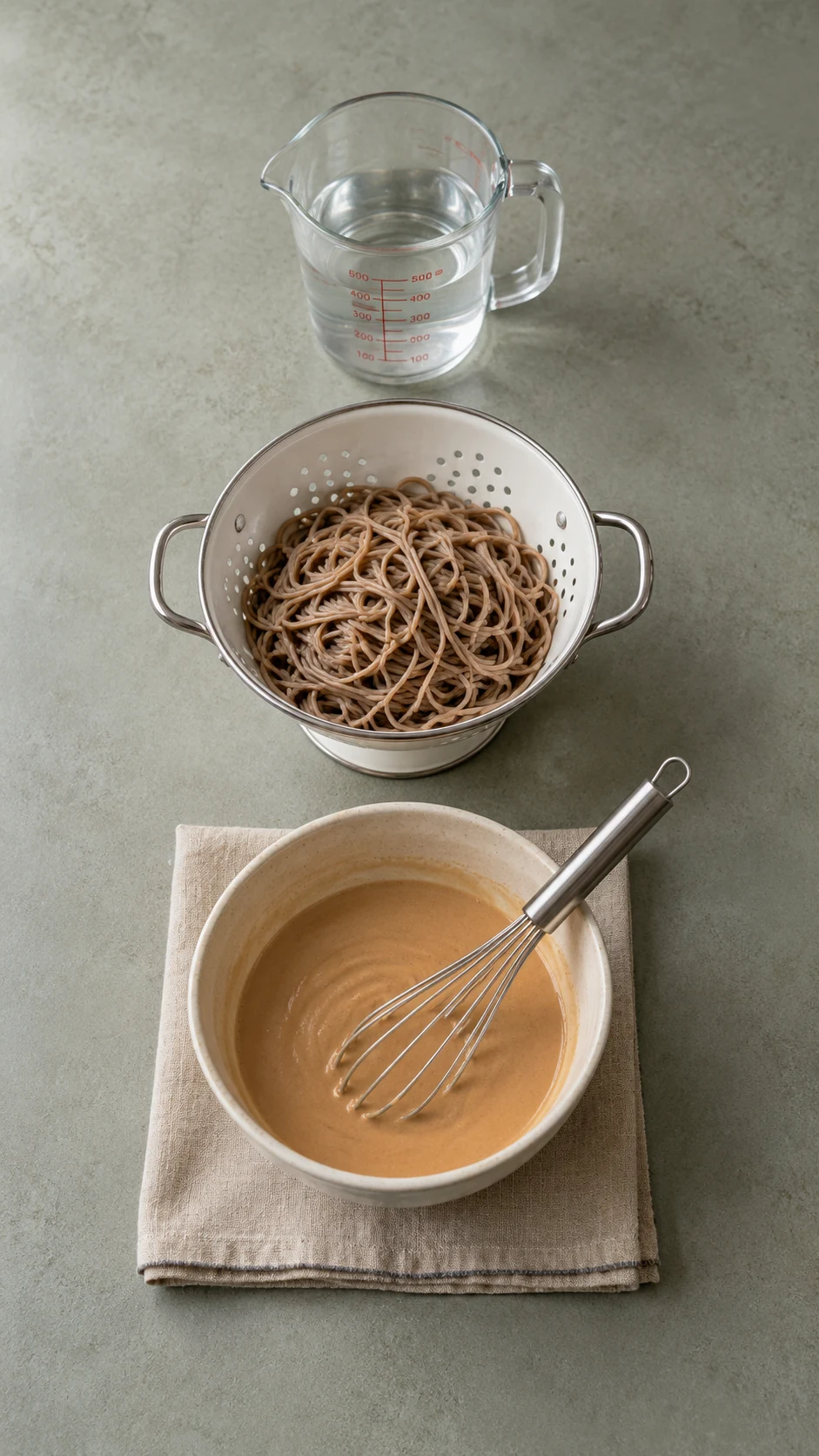
Noodles and peanut dressing stay separate until tossing. Use the recipe’s water allowance rather than the illustrated jug markings. - 05
Toss soba, edamame and vegetables with dressing. If stiff, use only what remains of the shared warm-water reserve; the extra water used while whisking and tossing combined must not exceed 2 tbsp. No 20-minute marination wait is required for this lighter vegetable mix.
- 06
Divide into four generous bowls and add chopped peanuts. Serve cool; refrigerate rather than leaving dressed noodles on the table.
Don't Miss This
Clumps: rinse starch off thoroughly. Thick dressing: add measured water gradually; diluted dressing: drain vegetables and noodles before mixing.
You Nailed It When
Separate cool noodles, crisp vegetables and a creamy coating that does not pool.
Storage & reheating
Refrigerate perishable components within 2 hours (1 hour above 90°F), in shallow covered containers at 40°F or colder. Use within 3 days. If reheating a cooked component, bring it to 165°F and avoid repeated reheating; cold salads remain cold. Refrigerate the dressed noodle bowl promptly and serve cold. Store orange segments separately. Do not reheat the raw cucumber and carrot; peanut dressing can thicken in the refrigerator.
Make it a meal.
31–45 min complete-dinner estimate
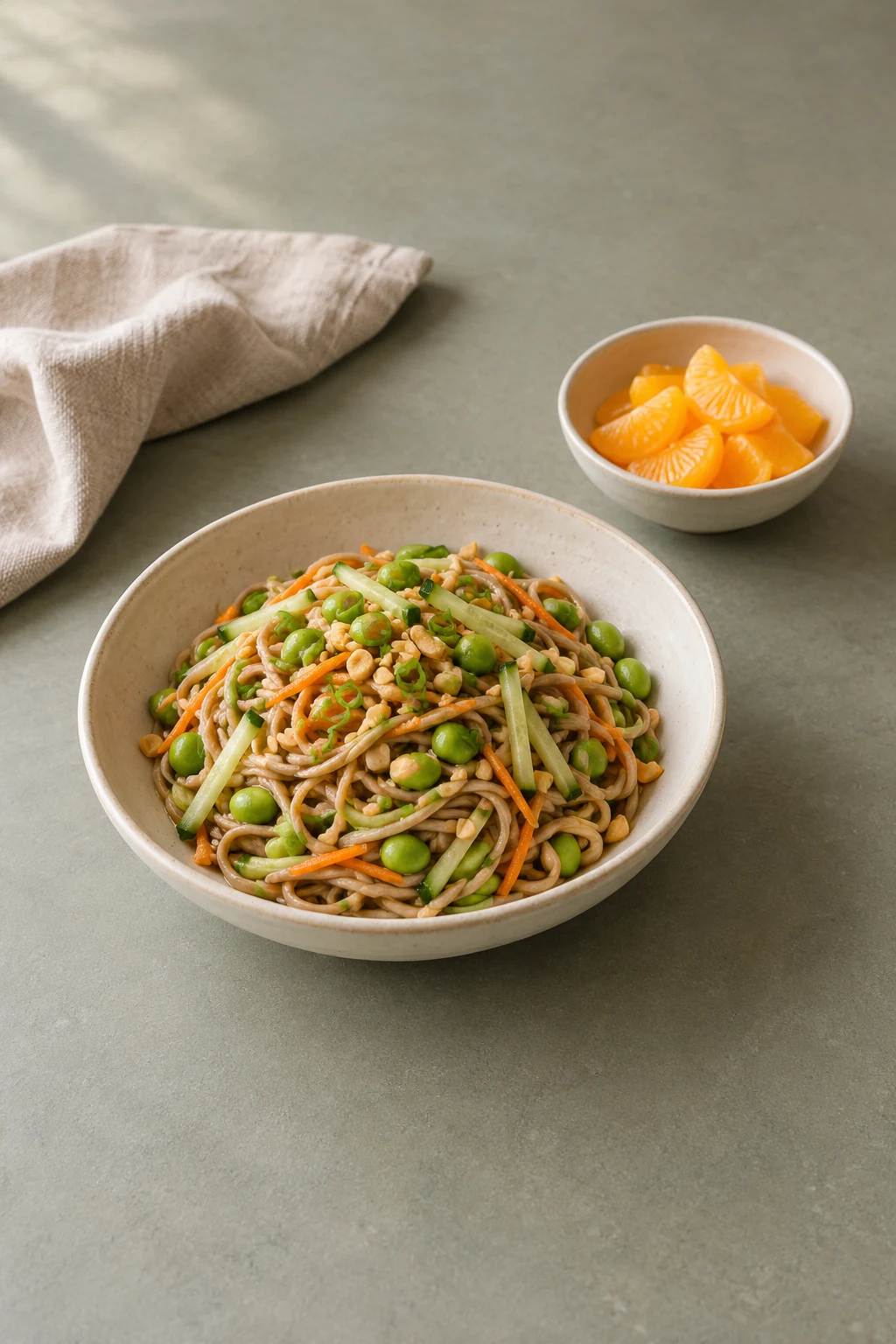
Our pick: Cool Soba Supper. Four diners; the following is additional shopping unless explicitly described as already included.
Companion quantities and preparation
Recipe already contains soba, edamame, vegetables and peanut sauce. Extra: 2 oranges, peeled and segmented; divide equally among four diners (5 minutes). No extra noodle, dressing or protein is needed.
Cook the whole dinner
Allow 31–45 minutes elapsed, estimated.
Pan and burner plan: large noodle pot, colander, slotted spoon, whisk and bowl; companion: main noodle pot and a separate fruit board.
- Prepare the measured peanut dressing including ginger and the vegetables while cold noodle water heats.
- Add edamame and begin three minutes of orange preparation, then pause to lift edamame exactly at its package endpoint. Add soba and finish the remaining two to four minutes of orange work nearby, preserving package checks/stirs; rinse and drain soba at its endpoint.
- Dress the cooled main bowl and portion four dinners; divide the two peeled, segmented oranges equally among the four diners. Refrigerate components if service is delayed.
Protect the result: Keep fruit separate from the peanut sauce and cool noodles refrigerated if service is delayed.
Estimated nutrition per serving
One of 4 equal portions of the written recipe.
- Calories
- 489 kcal
- Protein
- 24.5 g
- Carbohydrate
- 66.9 g
- Fat
- 18 g
- Fiber
- 8.9 g
- Sodium
- 875 mg
Calculation scope & assumptions
Listed ingredients per equal portion, including peanut butter, peanuts and the initial water. The one shared optional thinning-water reserve and orange companion are excluded. Household measures depend on food form and packing.
Estimated from USDA food-composition data and representative product labels. Actual products, portions and retained cooking ingredients can change the result.
Why it works
Rinsing removes excess surface starch and stops the noodle cook. Adding dressing to well-drained noodles preserves its intended body; edamame supplies a substantial component without a second hot-pan stage.
Substitutions and limits
Soba is often a wheat-and-buckwheat blend, not automatically gluten-free. Peanut-free sauce is a different formulation. Use the stated dry noodle weight and fully cooked edamame, not unprepared soybeans. Where fine salt is listed, another salt is not a volume-equivalent replacement; adjust only after tasting.
Allergens
Peanut, soy, sesame and often wheat in soba/soy sauce; do not label gluten-free without certified ingredients. Companion ingredients may add allergens; check every purchased product label.