THE METHOD
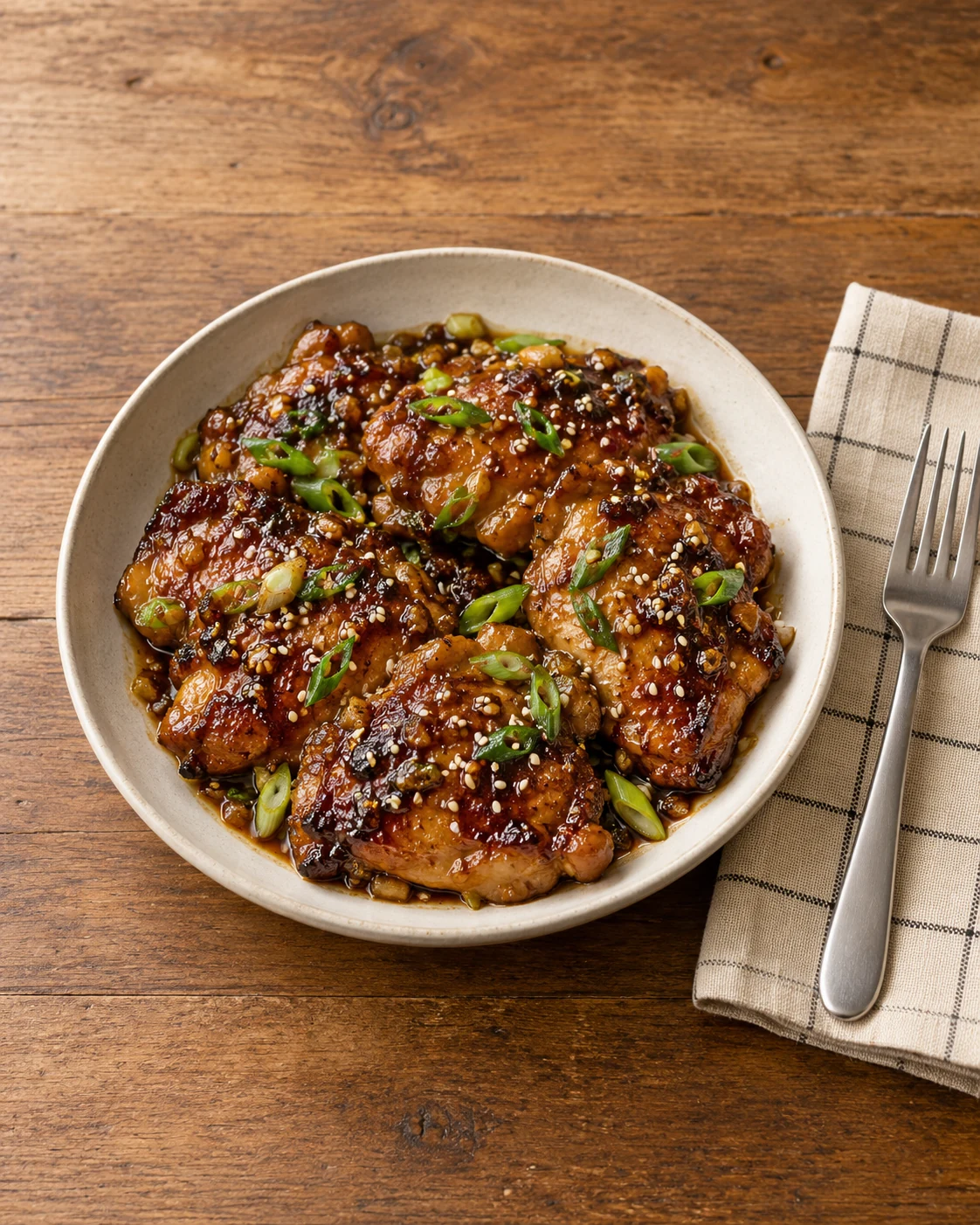
Glaze Without Steaming
A browned surface and a glossy coating need different conditions. This Method explains how space, dry heat and a late glaze work together, and why the final coating should still flow when the pan leaves the heat.
Measurements
Metric
US measuresSpace → Brown → Concentrate → Glaze → Stop
The memorable framework
SPACE → BROWN → CONCENTRATE → GLAZE → STOP
Space
Use a cooking surface wide enough for moisture to escape. Crowded meat or vegetables release water faster than the pan can evaporate it.
Brown
For the standard pan branch, create color before adding wet seasoning. Let the first surface stay in contact long enough to form a crust, then turn or break the food according to its shape.
Concentrate
Build a sauce with enough sugar, salt, acid, and aromatics to season the food after brief reduction. If the sauce must boil for a long time, it entered too dilute.
Glaze
For the standard pan branch, add the mixture only after browning. Toss or turn so the reducing liquid forms a thin film around the food rather than a braising bath.
Stop
Remove the pan while the glaze still looks slightly fluid. Residual heat and the short trip to the plate continue concentrating it; waiting for a dry pan often produces a sticky, over-salted coating.
Why it works
Browning requires a hot, comparatively dry surface. Glazing requires moisture so dissolved seasonings can spread, followed by just enough evaporation to cling. Doing the two jobs sequentially preserves both roasted flavor and a coherent coating.
Success cues
- Food has visible browned surfaces before sauce enters.
- Added sauce bubbles rapidly instead of cooling the pan into a quiet simmer.
- The liquid changes from a puddle to a shiny film within a few minutes.
- The finished glaze follows the food but remains soft enough to eat, not candy-hard.
Common failures
- Gray food: sauce was added before browning or the pan was crowded.
- Watery glaze: too much liquid entered or the pan lost heat.
- Burned sweetness: heat remained high after the sauce concentrated.
- Over-salted coating: reduction continued after the correct glossy stage.
- Soggy leftovers: glazed food was sealed while still steaming; cool promptly and reheat uncovered when appropriate.
Where else it works
- Honey-garlic chicken thighs
- Honey-garlic salmon
- Teriyaki-style vegetables
- Sticky tofu
- Glazed pork bites
- Lacquered meatballs
Take This With You
Earn the browning first. Add the glaze late. Stop while it still shines.
Put it to work.