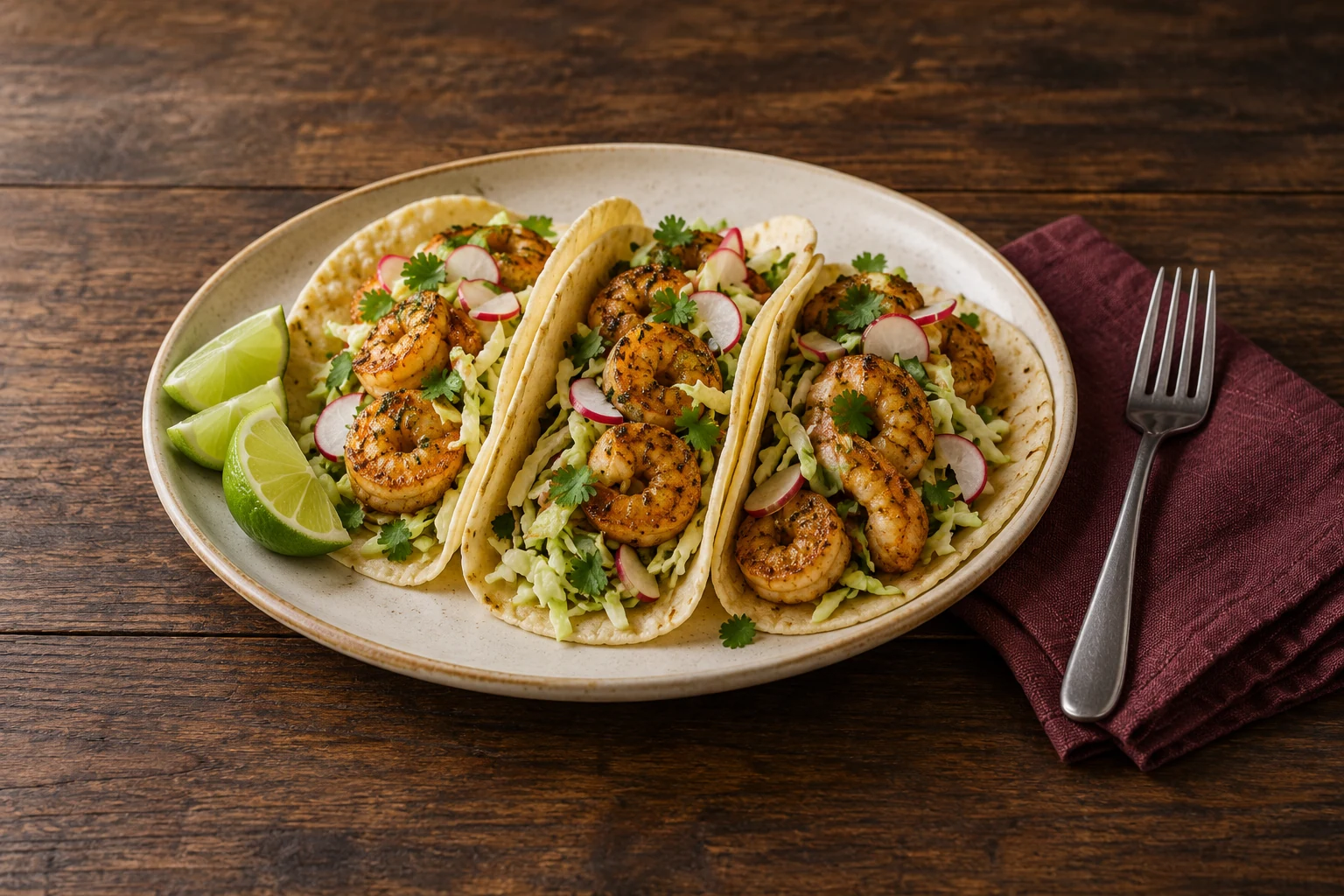
THE METHOD
Keep Seafood Tender
Tender seafood starts with the work around it. Learn how a dry surface, a hot pan and a short cooking window help, and why cooked seafood should leave the pan while any remaining finishing work happens.
Measurements
Metric
US measuresDry → Hot Pan → Short Cook → Carryover → Sauce
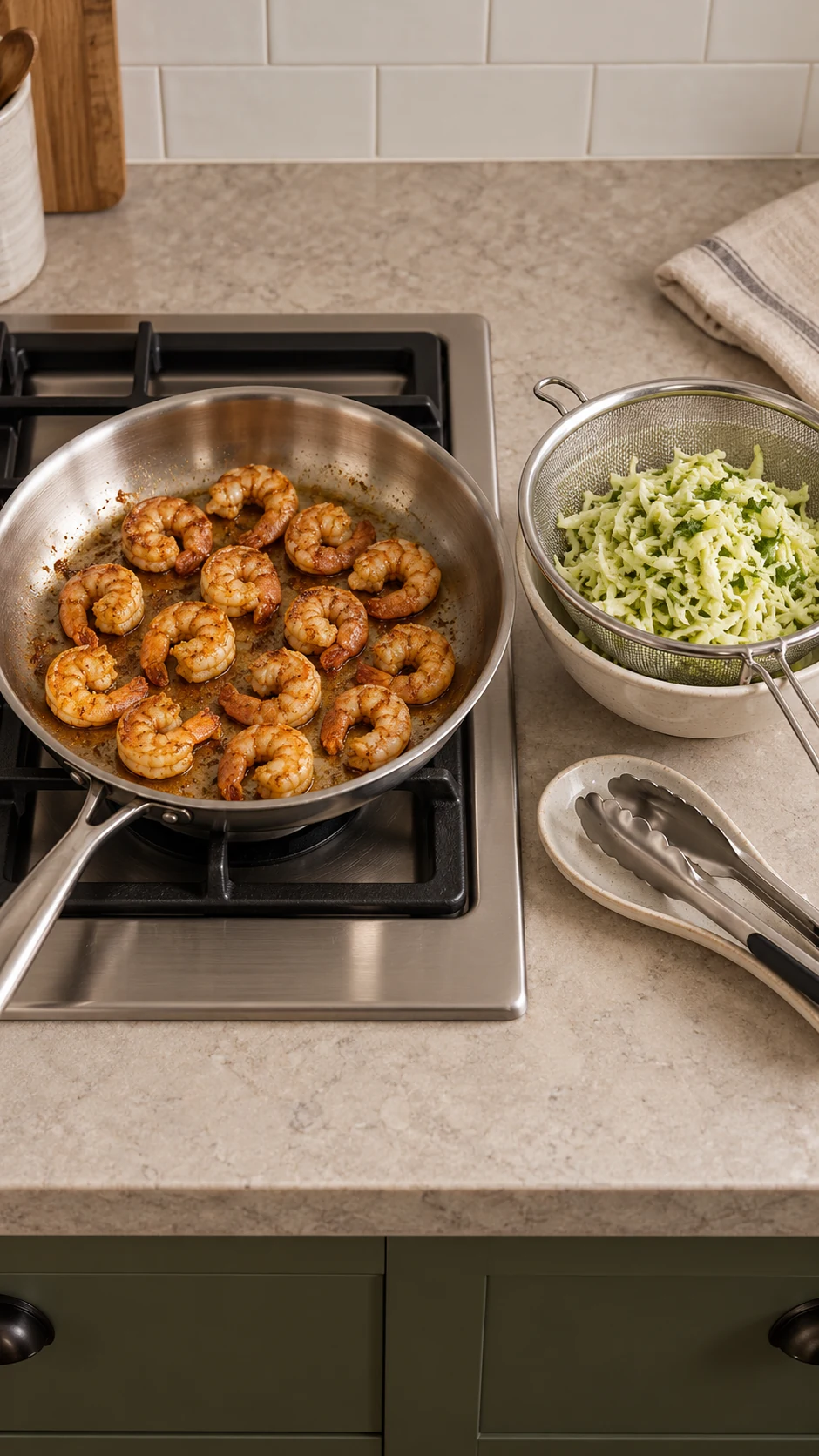
Put it to work in shrimp tacos.
Finish the drained slaw and warm, wrapped tortillas first. Cook the shrimp in their written short batches, transfer each to a clean plate at its stated endpoint, and assemble promptly. The preparation gives tender seafood a clear path from pan to table.
The memorable framework
DRY → HOT PAN → SHORT COOK → CARRYOVER → SAUCE
Dry
Remove surface water so delicate seafood browns before its center overcooks.
Hot Pan
Use enough stored heat for immediate contact, then adjust before thin edges race ahead.
Short Cook
Seafood changes quickly. Use visual cues and internal temperature early rather than waiting for a rigid clock.
Carryover
Account for heat retained in the food and pan. Remove seafood before sauce reduction or other finishing work prolongs its cooking.
Sauce
Build or finish sauce separately, then return seafood only long enough to glaze and reach its safe final temperature.
Why it works
Seafood has little tolerance between tender and dry. Separating browning from saucing gives the surface strong heat while keeping the center out of the pan during reduction.
Common failures
- Pale surface: seafood entered wet or the pan was cool.
- Albumin or dry flakes: salmon cooked too aggressively or too long.
- Tight shrimp curls: shrimp remained in the pan during sauce reduction.
- Broken fillets: fish was turned before its contact surface released.
Take This With You
Brown quickly, move it out, and let the sauce finish without overcooking the seafood.
Put it to work.