THE METHOD
Emulsify with Starch
Reserve → Reduce → Agitate → Coat → Adjust
The memorable framework
RESERVE → REDUCE → AGITATE → COAT → ADJUST
Reserve
Before draining pasta, save more cooking water than you expect to use. It carries dissolved starch and buys the cook control during the final minutes; plain water can loosen a sauce, but it does less to bind fat and liquid.
Reduce
Concentrate the sauce base before the pasta arrives. If both the base and pasta water are loose, the pasta must overcook before enough water evaporates. Reduction creates flavor and leaves room for controlled dilution.
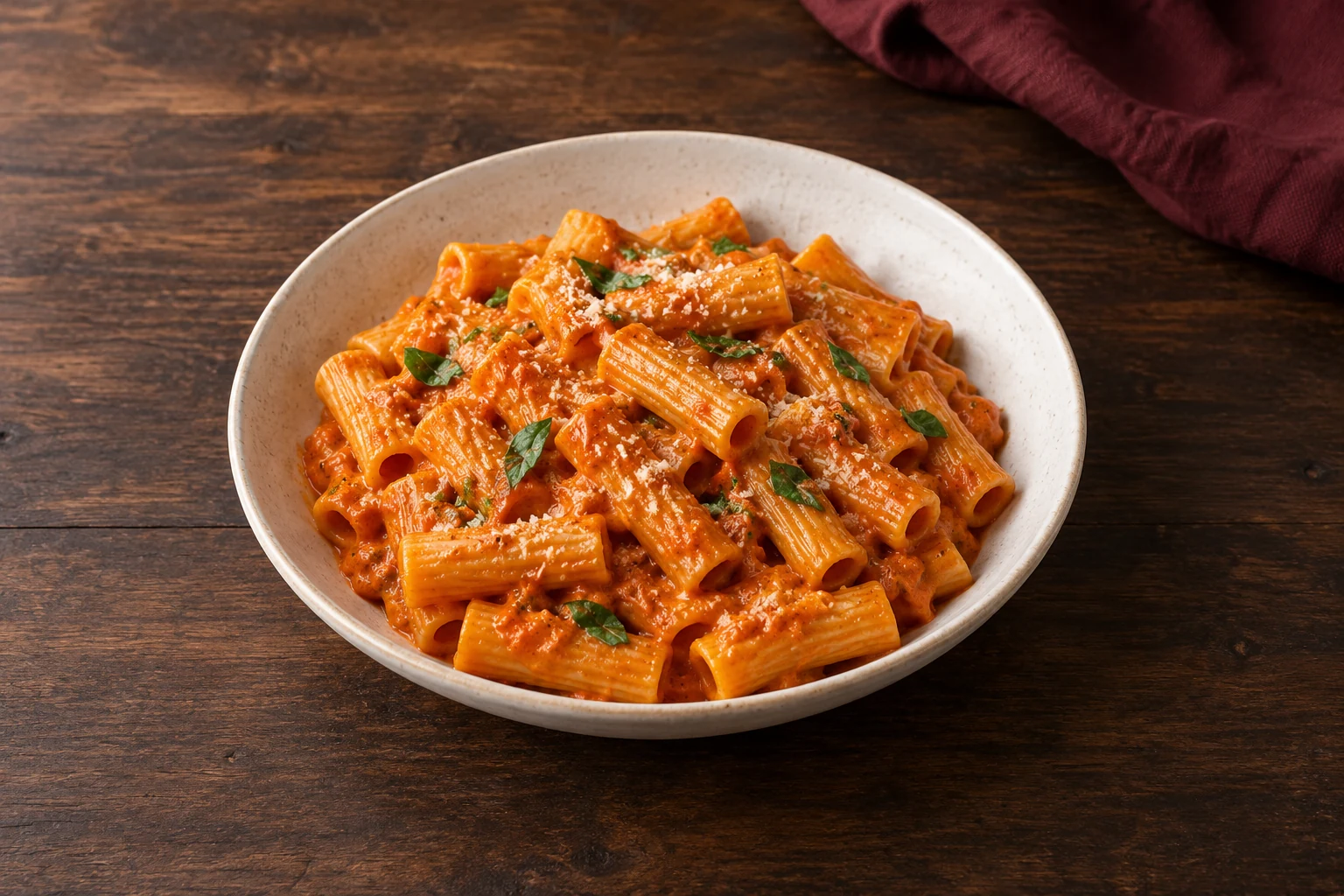
This is the reduced-tomato branch. Concentrate the tomato base before adding the pasta. Do not apply reduction indiscriminately to egg, pesto or ricotta sauces.
Agitate
Move the pasta through the sauce. Tossing and stirring distribute surface starch while breaking fat into small droplets, helping the liquid become cohesive rather than oily or watery.
Coat
Stop when the sauce clings to the food—not when the pan looks dry. Pasta continues absorbing liquid after leaving the heat, so the correct finish is usually slightly looser in the skillet than on the plate.
Adjust
Water is not a fixed ingredient at this stage. Add it in small amounts until the sauce flows; reduce briefly if it runs. Make the final salt decision only after cheese and reduced cooking water are incorporated.
For egg, pesto, and ricotta branches, do not correct looseness with an indiscriminate hard boil. Follow the recipe's off-heat or gentle-warming correction and serve promptly.
Why it works
An emulsion holds water and fat together as a unified sauce. Pasta starch increases the water phase's viscosity and helps slow separation, while agitation disperses the fat. Temperature matters: a hard boil can tighten dairy, seize cheese, or drive off water faster than the cook can respond. The Method creates a controllable finishing window rather than relying on a single measured splash.
What success looks, sounds, smells, and feels like
- Look: a glossy film follows the pasta and leaves no ring of oil.
- Listen: the pan moves from a watery simmer to a quieter, thicker bubble.
- Feel: pasta slides through the pan with light resistance instead of dragging through paste.
- Taste: sauce and pasta register as one seasoned bite; neither watery cooking liquid nor isolated fat is apparent.
Common failures
The sauce pools beneath the pasta
The base was not reduced enough, too much water was added at once, or the pasta did not finish long enough in the sauce. For heat-tolerant tomato bases, keep the pan moving over moderate heat until the coating forms. For egg, pesto and ricotta branches, stay off direct heat or use only the recipe's explicitly permitted gentle warming; do not boil those ingredients to repair pooling.
The sauce turns greasy
The pan may be too hot, the fat may have entered too quickly, or there may be too little water and starch to hold it. Move off heat and agitate with a small splash of warm pasta water.
The sauce becomes pasty
Too much starch, cheese added to an excessively hot or dry pan, or too much post-finish standing can tighten the sauce. Loosen a spoonful at a time and serve promptly.
The cheese clumps
Finely grate it, lower or remove the heat, and add it gradually while the pasta moves. A mass of cheese hitting a very hot, still pan is more likely to seize.
Where else it works
- Cacio e pepe
- Carbonara
- Lemon-ricotta pasta
- Pesto pasta
- Tomato-and-butter sauces
- Pan sauces finished with butter
- Starchy risotto-style grains, with adjustments for their longer cooking process
Take This With You
Reserve the water, reduce the base, then move the pasta until the sauce follows it.
Put it to work.